

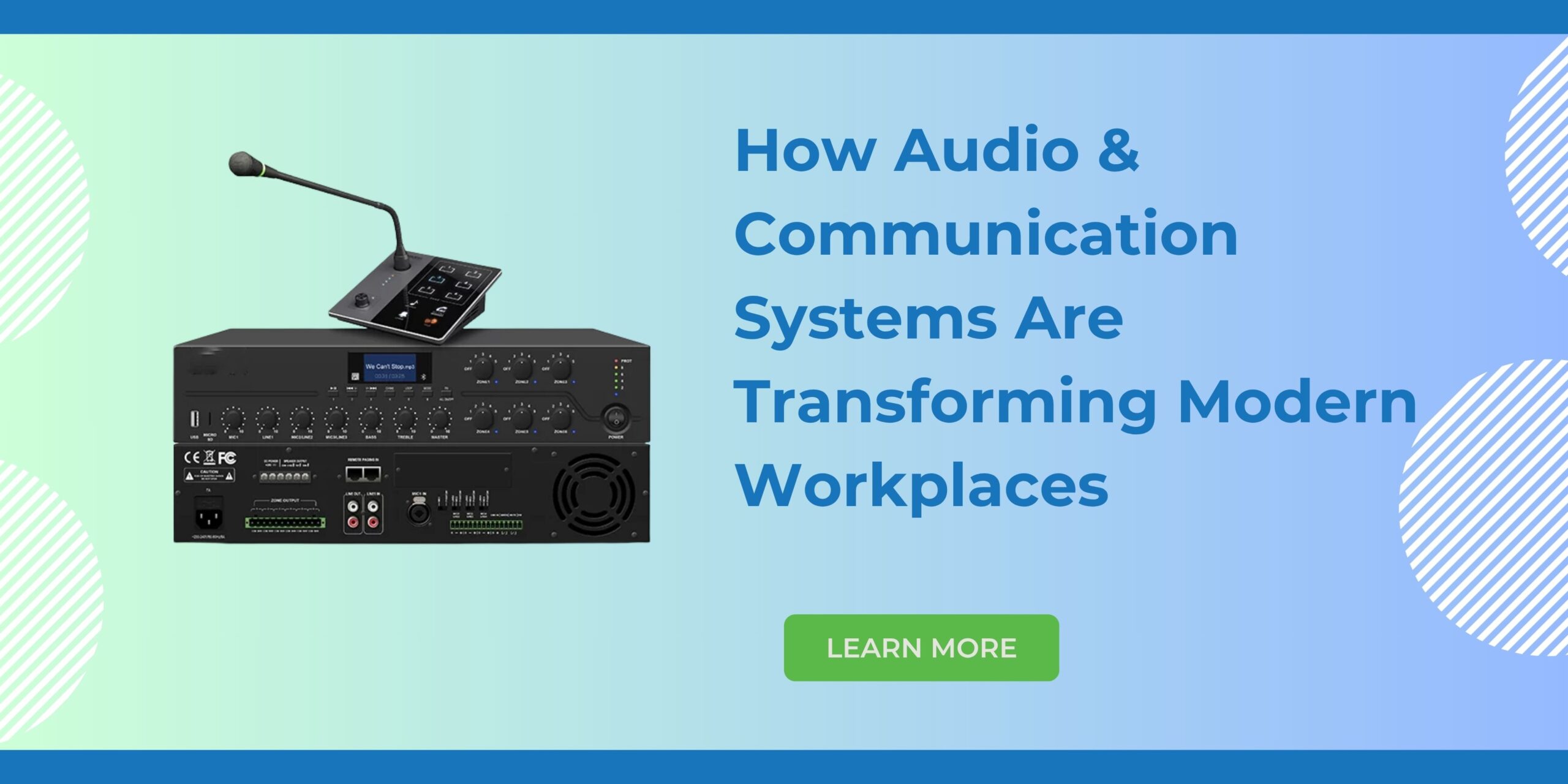
23 Mar How Audio & Communication Systems Are Transforming Modern Workplaces
In today’s fast paced business world, good communication is no longer a choice, it is a must.
To work well in today’s workplaces, people need to be able to work together without any problems, make decisions quickly and share information in real time. More and more, businesses are using audio and communication systems that boost productivity, make operations smoother and encourage teamwork to meet these needs.
Technology based communication tools are changing the way people work together and connect, from open plan offices to hybrid setups.
Companies that invest in communication systems for modern workplaces will be able to stay competitive, make their operations more efficient and make their teams’ work environments more interesting.
Businesses can use IP audio systems in their offices to make sure that communication is clear and dependable, whether it’s for announcements, conference calls or team meetings.
This in depth guide looks at how modern audio and communication tools are changing the way we work, what makes them so useful and how to use them effectively with the help of WiPath.
The Importance of Effective Communication in Modern Workplaces
The key to a successful workplace is clear and effective communication. Mistakes, missed deadlines and low morale among employees can all happen when people don’t communicate well. In fast paced office settings, traditional methods like email or printed notices are often too slow. Today, businesses need fast, reliable ways for employees in different departments, locations and even time zones to talk to each other.
Audio and communication systems make this important feature possible by sending out real time updates, instructions and announcements. These systems make sure that the right message gets to the right people quickly, whether it’s an unexpected change in the schedule, an important security alert or an announcement to the whole company. As more people work from home or in a hybrid way, businesses are relying more and more on Workplace communication solutions that work in both physical offices and online collaboration tools.
Benefits of Audio and Communication Systems
Adding audio and communication systems to offices has a number of clear benefits
- Better teamwork
Teams can quickly share ideas and work together more effectively. Integrated systems let you make conference calls, audio conferences and group announcements without any delays. - Better productivity
Employees can focus on their main tasks because they don’t have to spend as much time looking for information. Direct delivery of important updates and alerts cuts down on confusion. - Scalability
New systems are modular and can grow with your business, so you can add more offices or locations without having to spend a lot of money. - Reliability and Clarity
Advanced IP based systems make sure that the sound is clear and high quality, which cuts down on misunderstandings that happen when the sound is bad. - Integration with Digital Tools
A lot of systems work with calendars, messaging apps and workflow management software to make a single communication system. - Getting Ready for Emergencies
Getting instant alerts during emergencies can make the workplace safer and make sure that occupational health and safety rules are followed.
By taking advantage of these benefits, businesses can create a culture where employees are informed, aligned and involved, which will help the business succeed.
Features of IP Audio Systems for Offices
Modern IP audio systems for offices have a lot of features that make them necessary
- Network Based Audio Distribution
Use a central system to send messages to several rooms or floors at once. - Scheduled Announcements
Set up automatic messages for things like shift changes, lunch breaks or reminders to save time and cut down on mistakes. - Zone Control
Choose certain areas for announcements or background music. This makes it easier for big offices to communicate in different ways. - Emergency Notifications
Send urgent alerts to all devices to keep employees safe during important events. - Integration with Other Systems
Easily connect to video conferencing tools, security systems and digital signage for a smooth experience.
These features let businesses build a communication system that is both strong and flexible, meeting the needs of today’s offices.
Enhancing Employee Productivity and Engagement
Communication systems do more than send messages as they also help keep employees interested in their work. Clear and timely communication cuts down on misunderstandings, builds trust and helps employees feel like they are working toward the same goals as the rest of the company. Communication systems for modern workplaces make it easier to recognize accomplishments, share company news and reinforce the company’s culture.
IP audio systems for offices let people in hybrid or remote teams join meetings without any delays or technical problems. Employees can get important messages no matter where they are, which keeps them informed and interested. These systems help make the workplace more accessible and open, which helps build a strong and motivated team.
Integration with Digital Workplace Tools
Modern offices use a lot of different software programs to manage projects, set up schedules and work together. These tools work well with workplace communication solutions, which makes sure that messages are the same across all channels. Some examples are
- Connecting audio alerts to calendar events or due dates
- Working with messaging apps to send out alerts automatically
- Making sure that announcements and room booking systems are in sync
This level of integration cuts down on administrative work, cuts down on missed communications and makes the whole workflow more efficient.
Security and Scalability Considerations
As businesses grow and change, security and scalability become very important. Audio and communication systems need to be safe so that private information can’t be accessed without permission. Encryption and access control are used by modern IP based systems to keep data safe.
Scalability means that the system can handle new office locations, remote workers or more communication needs without having to be completely rebuilt. Working with experts like WiPath makes sure that companies put in place systems that are strong and will last for a long time.
Case Studies of Real World Implementations
Organizations across industries are adopting workplace communication solutions to streamline operations
- A multinational company set up IP audio systems in three office buildings. This cut down on missed announcements by 80% and made it easier for teams to work together.
- A tech startup used integrated audio and digital signage to help remote teams work together better, which led to faster project delivery and happier employees.
These examples show how investing in audio and communication systems can help you in real life.
Common Mistakes to Avoid
Even with advanced audio and communication systems, organizations can be much less effective if they make common mistakes when planning, putting them into action or using them every day. To get the most out of your investment, you need to know about these mistakes
- Not providing training
One of the most common mistakes is thinking that employees will automatically know how to use the system. If employees don’t get the right training, tutorials or reference materials, they might not use all the features, make mistakes or even avoid using the system altogether. Training helps employees understand how communication systems for modern workplaces can be used to increase productivity. - Making the Setup Too Complicated
Employees can get confused by systems that are too complicated, have too many features that don’t work together or have interfaces that are too cluttered. People may get frustrated and not use a system if it is hard to navigate. Teams can quickly and easily adopt the technology by putting an emphasis on intuitive design, clear instructions and user friendly dashboards. - Not paying attention to maintenance
It’s important to do regular updates, system checks and performance monitoring. If your software or hardware is out of date or breaks, it can cause communication problems, downtime or even loss of data. IT teams make sure that IP audio systems for offices stay reliable and work at their best by scheduling regular maintenance. - Not Working with Other Tools
A standalone system can handle calls or announcements, but it won’t be very useful if it doesn’t work with other tools like calendars, collaboration apps or security systems. Seamless integration makes communication easier by bringing everything together and avoiding broken up information. - Ignoring Employee Feedback
Employees are the main people who use workplace communication systems. Not listening to what they have to say can mean missing chances to make things better. Organizations can improve the system and get the most out of it by getting feedback on how easy it is to use, how efficient it is and how well it works. - Not thinking about how much space you will need in the future
Many offices don’t think about how much space they will need in the future. If your systems can’t grow to handle more departments, floors or locations, you might have to replace them sooner than you thought, which could cost a lot of money. Choosing solutions that can change over time makes sure they can adapt in the long run.
Businesses can fully take advantage of the benefits of workplace communication solutions, which will boost productivity, engagement and ROI, by avoiding these mistakes.
Future Trends in Workplace Communication
The world of workplace communication tools is changing quickly. By staying ahead of these trends, companies can stay ahead of the competition, work better together and meet the needs of today’s hybrid work environments
- Communication with AI
AI is changing the way messages are prioritized and sent. Smart systems can find important alerts, figure out the best way to communicate and make sure that important information gets to the right employees without overwhelming them. - Voice Activated Commands
People expect to be able to use their hands free devices. With simple voice commands, employees can manage announcements, change audio settings or send messages. This makes things easier and more efficient in busy offices. - Smart Integration with IoT Devices
More and more offices depend on connected devices like smart lighting, occupancy sensors and climate controls. Audio and communication systems that work with IoT devices can send alerts that take the situation into account. For example, they can let a team know when a meeting room is full or send safety messages when environmental sensors detect a problem. - Better Collaboration Analytics
New communication tools give you real time information about how many people your messages reach, how engaged they are and how well they work. Companies can keep an eye on how people use things, find problems and improve their plans to get more people to participate and do better work. - Hybrid Work Optimization
More and more people are working from home or in a hybrid way, so companies need systems that work for both in office and at home employees. Seamless workplace communication solutions make sure that remote workers get the same notifications, alerts and interactive features as onsite teams. This keeps everyone on the same page and included. - Personalized Messaging
In the future, systems will let you send messages that are specific to each person’s role, priorities or work schedule. This will make sure that employees only get information that is useful to them, which will cut down on distractions and boost productivity. - Cloud Based Systems and Mobility
Cloud based platforms let people from all over the world access them, make updates easily and fix problems from anywhere. This lets businesses keep communication going smoothly across many offices or regions.
Organizations can make their workplaces more flexible, responsive and collaborative by adopting these new ideas. Businesses can improve operational efficiency, employee satisfaction and organizational resilience by combining IP audio systems for offices with smart technologies. Companies that get on board with these trends early will not only improve communication within their own teams, but they will also have a stronger competitive edge in 2026 and beyond.
Conclusion
In today’s workplaces, communication needs to be quick, dependable and flexible. Audio and communication systems provide the technological basis for meeting these needs. They help businesses run more smoothly, work together better and get employees more involved.
Businesses can make sure that messages get to their destination on time, improve workflow and create a connected work environment by using communication systems for modern workplaces and adding IP audio systems for offices. Also, workplace communication tools make the workplace safer, support hybrid operations and encourage a culture of openness and efficiency.
When companies work with WiPath, they can professionally design and install these systems, customizing them to fit the size, structure and needs of the office. We make sure that companies see measurable improvements in productivity, collaboration and job satisfaction from the first planning stages through full deployment and ongoing management.
Investing in new communication technology now will make your office smarter, safer and more connected, which will help your business prepare for the future of work.
FAQ
1. What are systems for audio and communication?
They are all in one tools that let people send messages, make announcements and work together in real time from different places.
2. What makes communication systems important for modern workplaces?
In fast paced office settings, they make things run more smoothly, cut down on misunderstandings and help employees stay interested in their work.
3. What are the advantages of IP audio systems for workplaces?
The top trends include AI-powered personalization, programmatic DOOH advertising, cloud-based systems, interactive touchless displays, data-driven analytics, and immersive technologies like AR and 3D displays.
4. What is programmatic DOOH advertising?
Programmatic DOOH (Digital Out-of-Home) advertising uses automated systems to buy and display ads on digital screens in real time, based on audience data, location, and timing—similar to online advertising platforms.
5. How does digital signage improve customer engagement?
Digital signage improves engagement by showing dynamic, relevant, and interactive content. Features like personalized messaging, touchless interaction, and real-time updates make the experience more engaging for customers.
Sorry, the comment form is closed at this time.